Far beneath the ocean’s surface, hidden from view, powerful forces are constantly reshaping our planet. Most of Earth’s volcanic activity happens out of sight, deep under the ocean. In these hidden places, new crust is constantly forming while older rock splits apart and hot magma rises from below. This ongoing movement shows that our planet is still active and changing.
Sometimes, this underwater activity becomes strong enough to break through the ocean’s surface. When it does, it creates a completely new piece of land, such as a volcanic island.
When this happens, it can look almost unbelievable. The ocean surface may start to steam and ash can burst upward from below. Pieces of rock fall back into the water as the eruption continues. Gradually, layers build up and form a cone that keeps growing until an island emerges where only open ocean existed before.
In geological time, this process happens very quickly. For people observing from a ship, plane, or satellite, it can feel like watching the Earth create new land right before their eyes.
These islands are born quickly, but their future is uncertain. Some are eroded by waves within weeks and disappear just as fast as they form. Others cool, harden and stabilize, lasting long enough for life to appear – starting with microbes, followed by seabirds and eventually hardy plants. Whether short-lived or long-lasting, these islands of new land provide scientists with valuable insights into how new landforms and what it takes for life to survive in one of the harshest environments on Earth.
1. From Deep Seafloor, Magma Rises
Deep beneath the seafloor, rocks can become so hot that they melt into magma. Because this molten rock is less dense than the solid rock around it, it naturally rises upward. If there are cracks or weakened areas in the Earth’s crust, the magma can force its way into them, building pressure as it moves closer to the surface.
In many areas of the ocean, these pathways form along plate boundaries or volcanic arcs. Magma movement can stay slow for years, then suddenly speed up. When a surge of magma enters a crack, it can spread outward and push upward, gradually lifting the seafloor from beneath.
Sometimes the first clue comes from earthquakes.When magma starts to rise or press into the crust, it creates stress in the surrounding rock. This stress causes many small fractures to open and slip, producing a cluster of small earthquakes called an earthquake swarm.
Those fractures are important because they act like pathways. As the rock cracks and weakens, it becomes easier for magma to squeeze into those spaces. The magma then moves by pushing through and inflating these cracks, gradually spreading into new areas underground. A Nature study on new islands in the southern Red Sea found signs of magma moving through long underground sheets called dykes, which fed eruptions that built islands surprisingly quickly.
That hidden rise is important because it influences what happens next. A narrow pathway can concentrate an eruption at a single vent, while a longer crack can spread volcanic activity along a line on the seafloor. In both cases, the volcano begins forming underwater, long before it becomes visible above the surface.
Gradually, erupted material builds up around the vent. Fragments of lava, ash and shattered volcanic glass settle close by, slowly forming a growing mound. As this underwater cone rises into shallower water, the eruption can become much more explosive. At this stage, island formation may speed up rapidly.
2. Seawater Turns the Eruption Violent
Submarine volcanoes are volcanoes that form and erupt beneath the ocean’s surface. Hidden from view, they are part of Earth’s vast volcanic system on the seafloor. Although they often go unnoticed, these underwater giants can be highly active. When they erupt, hot magma meets cold seawater, producing explosive reactions and breaking into fragments. Over time, this volcanic material can accumulate, slowly building up the seafloor – and in some cases, even creating entirely new islands.
When water meets magma and usually calls phreatomagmatic eruption. the eruption can become very violent because of how quickly water turns into a steam. Magma is extremely hot, often over 1000°C. When seawater suddenly touches it, the water flashes into steam almost instantly. Steam takes up far more space than liquid water, so it expands rapidly and creates a powerful buildup of pressure.
This effect is most intense in shallow water. The ocean pressure is not strong enough to contain the expanding steam, yet enough seawater still reaches the magma to keep the reaction going. This balance leads to repeated bursts and collapses, which are commonly seen in early stages of volcanic islands forming.
Volcanologists refer to this type of activity as a Surtseyan eruption, named after the Icelandic island Surtsey, which formed in the 1960s. phreatomagmatic eruption is the closest scientific equivalent, while Surtseyan specifically refers to the style of explosive eruptions that build islands in shallow seawater. Although the term sounds complex, the concept is straightforward. When hot magma comes into direct contact with cold seawater in a confined space, the sudden interaction causes the magma to break apart violently into fragments.
At the surface, that violence looks chaotic. Jets of steam surge upward. Black or brown plumes billow out. Wet ash falls back into the sea and onto the growing cone. In a matter of hours, the water around the vent can turn milky, greenish, or brown with suspended material.
Each explosion also produces new building material. Instead of flowing smoothly on land, the magma breaks apart into tiny fragments when it erupts underwater. These fragments are crucial in the early stages of a new island’s formation because they can quickly accumulate around the volcanic vent, gradually building it up and helping the volcano rise toward the ocean surface.
This type of eruption is also why submarine volcanoes can be so surprising. What once appears to be empty ocean can quickly turn into a violently active construction zone. As the volcanic vent rises closer to the sea surface, the eruption begins building up land and even forming a coastline – often before a stable, walkable island has fully formed.
3. Ash, Glass and Rock Build a Cone
As the eruptions continue, the volcano starts piling loose material around its vent. This mixture includes ash, small rock fragments (lapilli), volcanic glass and larger pieces of rock. At first, the material is wet and heavy, but it gradually settles and builds up into a steep-sided cone that rises from the sea like a dark ring.
Some of these fragments are newly formed pieces of magma that cooled quickly after contact with seawater. Others are older rocks torn from the vent walls or the surrounding seafloor. Together, they form a loose, unstable pile that can grow rapidly during an active eruption.
Here’s where the newborn island gets its first real shape. Repeated blasts throw material outward, then gravity drags some of it back down the slopes. Waves rework the edges at the same time. The result is a cone that is being built and trimmed in the same breath.
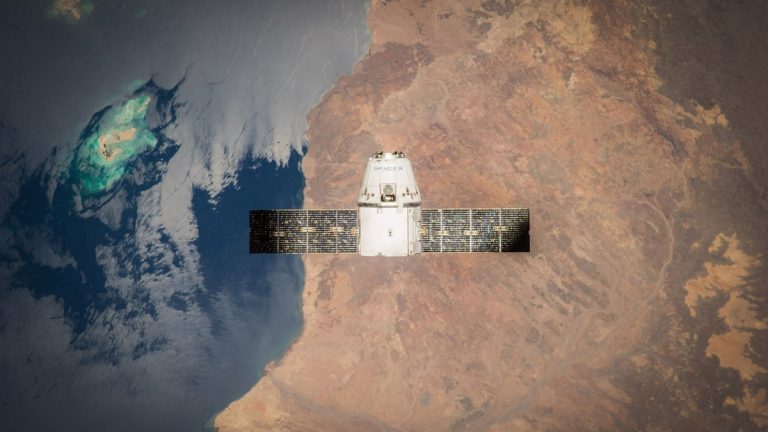
Scientists studying recent eruptions have watched this happen from space. In a Tonga study, researchers tracked how a new island formed during a 2019 eruption and how quickly its outline changed soon after. Satellite images showed the cone growing, collapsing in places and then being rapidly chewed by the ocean.
The composition of that growing pile is important. A cone made mostly of loose ash and fragile debris is easily eroded and short-lived. In contrast, one that later hardens through solidified lava or natural cementing can become much more durable and long-lasting. But in the beginning, nearly every volcanic island starts out as nothing more than a loose accumulation of ash and broken rock, built at the edge of extreme volcanic activity.
4. The Volcano Reaches Daylight
Eventually, the growing cone becomes tall enough to break the ocean’s surface. This is often the most dramatic stage, but it also marks a major change in how the eruption behaves. Once part of the vent is exposed to open air, seawater can no longer interact with the magma in the same way and the intensity of the eruption may shift.
At first, the new island may appear as a low, dark ring with a crater in the center. Waves can still wash over it and steam may continue to rise from parts of the vent. Fresh ash may keep falling, gradually thickening the rim, while the crater sometimes fills with seawater and forms a temporary lake.
From above, these young islands look fragile and newly made. Their edges are sharp and their colors can vary from black to rusty red to pale tan, depending on moisture, minerals and fresh deposits. The landscape is so dynamic that it can noticeably change between satellite observations.
NASA scientists followed one of these events in Tonga after an undersea eruption built land between older islands. In their report, NASA researchers quoted planetary scientist Jim Garvin, who said, “Volcanic islands are some of the simplest landforms to make.” It’s a sharp line because it captures the speed of the process. A volcano can throw together a visible island in weeks.
Even so, breaking the surface is only the start of the island’s challenges. Newly formed land must immediately endure waves, rain, gravity and its own unstable slopes. Crater walls may collapse inward and sections of the rim can be eroded or cut away by the sea. In some cases, fresh volcanic deposits can later rebuild and seal these gaps within days.
So, the island that appears on the map after an eruption is really just a first draft. It may spread outward, shrink back, connect with older islands, or break apart again. What truly matters is that the volcano has crossed a key threshold and transformed a submerged structure into land above sea level.
5. Waves Begin Carving and Eroding the New Coast
The ocean begins eroding a newborn island almost immediately. Waves strike its soft outer slopes, especially where loose ash and broken rock are exposed. In storms, large amounts of material can be removed quickly, carving cliffs, channels and notches into a coastline that may only be days old.
Because these islands are so young and fragile, their shorelines can change rapidly. On one side, ash is washed down and reworked by waves to form temporary beaches. On another, the sea may cut directly into the cone, opening gaps that alter how water flows around the entire island.
Erosion can seem purely destructive, but it also helps reshape the island into a more stable form. Material removed from one area may be redeposited elsewhere as sandbars or spits. If these features reduce wave impact or seal openings in a crater, they can temporarily protect the island and slow further erosion.
Gravity adds another force of change. Water-saturated slopes may suddenly slump, crater rims can collapse and unstable blocks of debris may slide into the sea. In these early stages, the island is constantly being reshaped from both above and below – waves cutting inward while loose material moves downhill.
This is why maps of a young volcanic island can look very different within a single season. The volcano creates the land, but the sea immediately begins reshaping it. What remains after this constant adjustment becomes the foundation for whatever comes next – whether a lasting island or only a brief moment in the geological record.
6. Some Newly Formed Islands Hold Their Ground
Some volcanic islands survive because their materials gradually become stronger. The heat from the eruption can alter ash and volcanic glass, transforming loose deposits into a more rock-like material known as tuff. This natural hardening gives incoming waves a much more resistant surface to wear down.
Another key factor is lava. If thicker lava flows or domes become part of the island, they can form a solid core. This stronger interior resist erosion far better than loose, water-saturated ash, helping the island retain its height and overall shape.
Location also plays an important role. Islands formed in sheltered waters are more likely to endure than those exposed to constant, powerful ocean swells. The shape of the surrounding seafloor can further help – eroded material may settle nearby and form natural barriers that reduce wave energy before it reaches the island.
Over time, chemical processes add another layer of stability. Minerals in hot volcanic deposits react with seawater and rain, gradually filling the tiny spaces between grains. What begins as fragile debris slowly becomes a more solid, cemented mass of rock.
That helps explain why a few young islands persist long enough to become familiar landmarks. Their silhouettes still change, but they stop behaving like loose piles and start acting more like proper volcanic terrain. In those cases, wave erosion keeps working, yet the island has enough strength to stay above the surface.
Years later, these surviving islands become valuable natural laboratories. Scientists can study how coastlines change, how volcanic rock evolves and how ecosystems begin to form. What starts with fire continues to be shaped by wind, salt, life and time.
7. Some Newly Formed Islands Don’t Last
Many new islands have a much shorter lifespan. If they are made mostly of loose ash and fragile debris, the ocean can erase them within months. The process is harsh and relentless. Waves undercut the base, storms tear at the rim and over time, the cone slowly sinks back beneath the surface.
In some cases, the eruption itself sets the stage for this quick destruction. A steep cone formed from fragmented material may look impressive from above, but its internal structure is weak. Once the eruptions stop, there’s no fresh supply of material to replace what the sea steadily erodes day by day.
Fresh examples from Tonga show how fast this can happen. One newly formed island tracked by scientists in 2019 was largely reclaimed by the ocean within two months after the eruption ended. Its predecessor from 1995 lasted for decades because it included a harder lava dome. That difference in materials shaped the island’s fate.
Weather adds another layer of risk. Heavy rain carves channels into the ash slopes and strong waves target these channels. Just one season of rough seas can cause more damage than months of calm water.
What disappears remains geologically significant. The volcano stays beneath the surface, often as a shoal, submerged cone, or a hazard to ships. While the land may vanish, the eruption has still altered the seabed, adding another chapter to the ongoing formation of Earth’s volcanic islands
8. Newly Formed Land as a Natural Laboratory
When a new island survives its first assault from the sea, it becomes one of the best natural laboratories on Earth. Everything starts from scratch. The rock is new, the soil is just beginning to form and life has to arrive from elsewhere. Scientists get to observe this process unfold.
At first, tiny microbes are often among the first to settle. They can live in mineral-rich cracks, damp ash and hot ground affected by volcanic gases. Their activity begins the slow process of turning raw materials into soil. Birds can also arrive quickly, using the island as a resting or nesting spot. They bring nutrients with their droppings and transport seeds, spores and tiny animals on their feathers and feet.
Plants typically come later, once the ground is stable and moist enough. The first plants are usually hardy species that can survive saltwater, poor soil and extreme exposure. Their roots help hold the loose materials in place, making the island more stable.
For researchers, these places offer a rare look at ecological succession, the step-by-step arrival of life in a new environment. They also help scientists compare Earth with other worlds. A raw volcanic landscape shaped by water, heat and chemistry can echo the conditions that once existed on early Earth and perhaps on other planets too.
That’s part of the wonder of it all. An undersea volcano can start with a crack in the seafloor and end with a living island, even if it only lasts for a short time. In that brief period, it shows how magma meets seawater, how coastlines form and how life begins to test a brand-new shore.