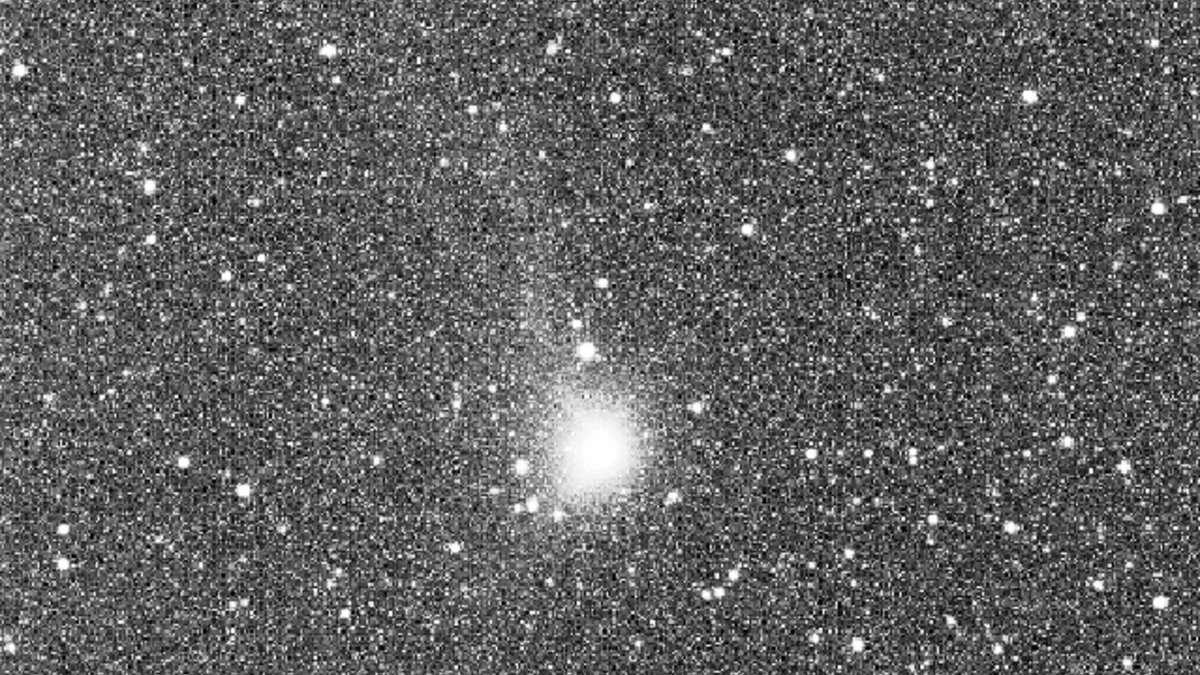
The European Space Agency has mounted a Solar System-wide observing campaign for Comet 3I/ATLAS, a rare interstellar visitor discovered on July 1, 2025. After automated detection systems alerted astronomers to the object, ESA teams quickly began tracking it with telescopes on Earth and spacecraft already operating across space.
The campaign turned an unexpected visitor into a coordinated science opportunity. Ground-based telescopes in Hawaii, Chile and Australia began monitoring the comet soon after discovery. Space telescopes near Earth then joined in, followed by Mars orbiters and ESA’s Jupiter-bound Juice spacecraft.
That spread of observing locations matters. A comet seen from Earth gives one line of sight. A comet seen from Mars, Earth orbit and a spacecraft en route to Jupiter gives scientists a richer view of its motion, brightness and changing behavior as sunlight warms its surface.
A Rare Visitor From Another Star System
Comet 3I/ATLAS entered the Solar System from interstellar space, making it a scientific target with unusual value. Objects like this carry material that formed around another star. When one passes close enough for telescopes to study, astronomers get a brief chance to compare distant planetary systems with our own.
Comets are icy bodies that become active as they approach the Sun. Heat releases gas and dust from their surfaces, creating a hazy coma and sometimes a tail. For an interstellar comet, those gases and dust grains can carry clues about the chemistry of a different birthplace.
The name 3I/ATLAS reflects both its interstellar classification and its discovery connection. The “I” marks it as an interstellar object, while ATLAS refers to the survey system that first detected it. Its path brought it through the inner Solar System during 2025, giving spacecraft teams a limited window to observe it.
ESA’s response shows how modern planetary science can pivot when a rare object appears. Missions designed for Mars, Jupiter, X-ray astronomy and planetary defense can sometimes contribute to a shared target. In this case, several of them could look at 3I/ATLAS from very different angles.
ESA’s Rapid Telescope Response
ESA reacted promptly after the comet was discovered on July 1, 2025. Automated detection systems first flagged its presence, then ESA astronomers began using ground-based telescopes to monitor its progress. The observing network included telescopes in Hawaii, Chile and Australia.
That geographic spread helped astronomers follow the comet across the sky. Telescopes at different longitudes can pick up observations when others lose the target to daylight or weather. For a fast-moving interstellar object, repeated measurements are especially useful.
Early tracking helps scientists refine an object’s path. Each observation improves estimates of where the comet has been and where it will go next. That matters for planning spacecraft observations, because deep-space missions need careful pointing schedules and power constraints.
The first days and weeks after discovery also help reveal how active the comet is. Changes in brightness can hint at gas and dust release. A comet that grows brighter as it approaches the Sun may be shedding material from its surface, giving instruments more to study.
Space Telescopes Join the Watch
After the ground-based campaign began, space telescopes close to Earth also observed the comet. The list includes the NASA/ESA Hubble Space Telescope, the NASA/ESA/CSA James Webb Space Telescope, ESA’s XMM-Newton and XRISM.
Each observatory brings a different kind of vision. Hubble is known for sharp views in visible and ultraviolet light. Webb studies the universe in infrared wavelengths, which can help scientists examine warm dust and molecular signatures. XMM-Newton and XRISM add high-energy perspectives.
Using multiple telescopes can make a comet campaign more powerful. One instrument may reveal the shape or spread of a coma. Another may detect light linked to specific gases. A third may help scientists look for energetic processes associated with the comet’s interaction with sunlight and the space environment.
Near-Earth space telescopes also avoid many limitations of ground observing. Earth’s atmosphere blurs some details and blocks certain wavelengths. Space observatories can collect cleaner data in parts of the spectrum that never reach the ground.
For 3I/ATLAS, these observations help build a timeline. Scientists can compare how the comet looked before, during and after its closer approach to the Sun. That timeline may show how its activity changed as solar heating increased.
Mars Orbiters Get a Prime View
In October 2025, ESA turned two Mars missions toward the comet. Mars Express and the ExoMars Trace Gas Orbiter observed 3I/ATLAS as it moved through the inner Solar System. Their position near Mars gave them an observing geometry unavailable from Earth.
This kind of viewpoint can sharpen the comet’s trajectory. When astronomers observe an object from separated locations, they can better pin down its position in three-dimensional space. The effect is similar to depth perception, with each observing site adding a different angle.
Mars orbiters also offer a rare test of spacecraft flexibility. These missions were built to study Mars. Mars Express has spent years examining the planet’s surface, atmosphere and subsurface. The ExoMars Trace Gas Orbiter was designed to study gases in the Martian atmosphere and support communications.
Pointing those spacecraft at a faint comet requires careful planning. Mission teams have to consider instrument limits, spacecraft orientation, thermal conditions and communications. Even when a target is scientifically tempting, the spacecraft must remain safe.
The reward is a view that Earth-based observatories cannot copy. From Mars, the comet appeared against a different background and from a different direction. That helps scientists connect separate observations into a broader picture of how 3I/ATLAS crossed the Solar System.
Juice Sends Home Its Comet Data
ESA also turned the Jupiter Icy Moons Explorer, known as Juice, toward 3I/ATLAS in October and November 2025. Juice is traveling toward Jupiter and its icy moons, yet its cruise through interplanetary space gave it another chance to study the comet from a distinctive vantage point.
The observations were especially valuable because Juice was far from Earth. A spacecraft in deep space can see a comet under different lighting and viewing conditions. That can help scientists separate dust behavior, gas activity and the shape of the comet’s surrounding coma.
The Juice data has recently arrived on Earth, according to ESA. Scientists are now analyzing it to see what the observations reveal. That phrasing is important, because the findings are still being studied. The campaign has produced data and the detailed interpretation is still underway.
Juice’s involvement also shows how planetary missions can produce science beyond their central destination. The spacecraft is headed for the Jupiter system, where it will study icy moons. During its journey, it can still take advantage of rare targets that cross its field of reach.
For mission planners, such opportunities require speed and discipline. A comet’s path is fixed by celestial mechanics, while a spacecraft’s schedule is shaped by power, communication windows and instrument readiness. Successful observations come from matching those constraints before the opportunity passes.
What Scientists Hope to Learn
Scientists are analyzing the observations to learn how 3I/ATLAS behaves as an interstellar comet. Its brightness, gas release, dust structure and changing coma may all help reveal what kind of material it contains. Those properties can be compared with comets that formed in our own Solar System.
One key question is how the comet responds to sunlight. As solar energy warms the surface, buried ices can turn into gas and carry dust into space. The strength and timing of that activity can tell scientists about the comet’s composition and surface condition.
Another question concerns its path. Accurate tracking helps confirm how the comet moved through the Solar System and how gravity affected its course. Observations from Mars, Earth and deep space can strengthen those orbital calculations.
The wider campaign may also help scientists prepare for future interstellar visitors. Each object arrives with little warning and follows its own geometry. By practicing rapid coordination across telescopes and spacecraft, space agencies can improve their response the next time a visitor from another star system appears.
For now, ESA’s observations have turned 3I/ATLAS into a shared target for many missions. The comet is a passing object, yet the data it leaves behind may keep researchers busy long after it has moved away from the Sun.