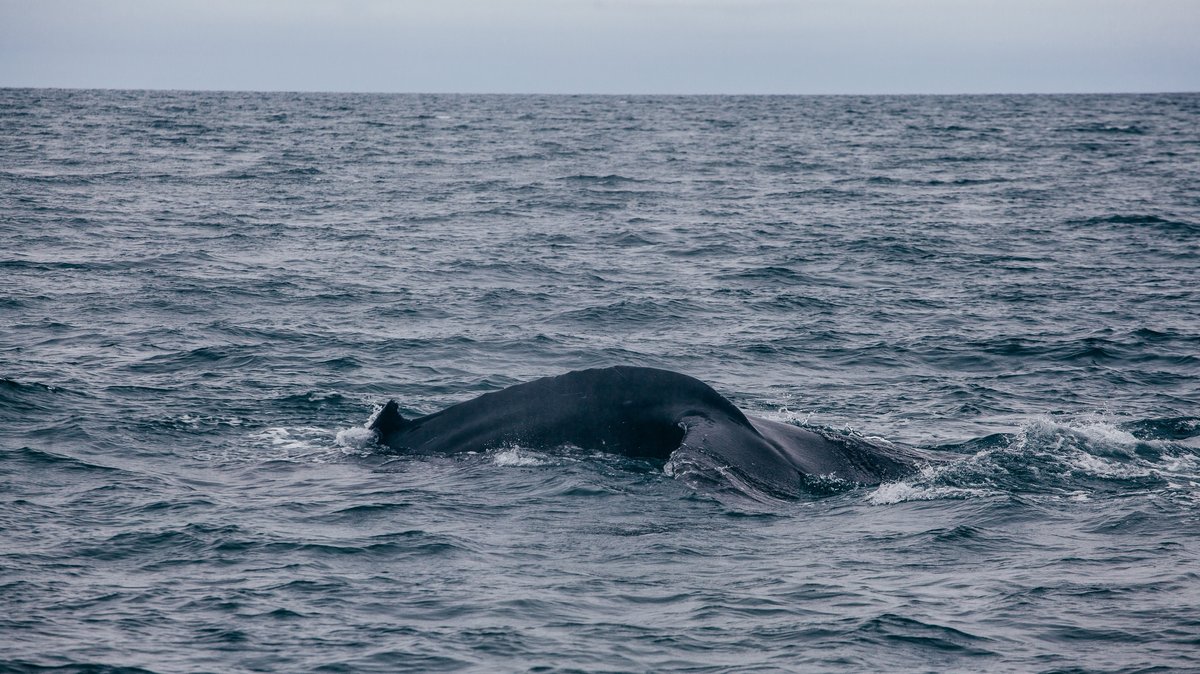
When a whale surfaces from the dark water and breathes into the open air, it may seem like just a brief moment in a vast, empty sea. In truth, there’s much more happening than it seems. These animals help shape ocean ecosystems in ways that ripple from sunlit surface waters to the deep seabed, where life can gather around the remains of a single giant body for years.
Movement contributes to such influence. Whales migrate over great distances, feed deep and surface frequently. They do this by moving nutrients around vast ocean basins and through the water layers. Scientists have spent years studying how that process works and the more they learn, the more fascinating it becomes.
That means whales are part of a bigger story – one that includes plankton, fisheries and carbon, not just whales themselves. It also means the effects of commercial whaling still linger in today’s oceans, because the loss of whales changed much more than their numbers.
The Whale Pump
One of the clearest ideas in this field is the whale pump. It describes a simple pattern with powerful effects. After feeding at depth, many whales come to the surface to breathe, rest and expel waste products. That activity moves nutrients up into the sunlit surface waters, where tiny drifting organisms can use them. A classic PLOS ONE study helped frame this process in the Gulf of Maine.
Surface waters often run low on key ingredients for growth. Sunlight may be plentiful, yet life still depends on a steady supply of nitrogen, iron and other nutrients. In that system, whales help recycle nutrients. By feeding at depth and releasing waste near the surface, they keep nutrients moving where sunlight supports photosynthesis.
That matters because the upper ocean is where surface waters fuel much of the marine food web. Phytoplankton grow there. Zooplankton feed on them. Fish, seabirds and marine mammals depend on those lower levels in turn. A burst of nutrients from whales can spread through many levels of ocean life.
Researchers have described this as a form of nutrient recycling. It sounds simple, but the animals involved are actually very impressive. Baleen whales are among the biggest animals in history and their enormous bulk cause even normal physiological functions to scale up quickly. Size becomes influence in the context of ecology.
The process is simple and quite elegant. No machines are involved and nothing dramatic happens. A whale just dives, feeds, rises, breathes and continues its day. When many whales do this over time and across seasons, these ordinary actions can fertilize large areas of the ocean.
Nutrients on the Move
Whales also carry nutrients sideways through the ocean. Migration turns their bodies into long distance transport systems. They eat in nutrient-rich waters, often in colder regions and then migrate to breeding and calving areas that have fewer nutrients. What they consumed in one place can end up enriching another.
That idea has become vivid enough to earn a memorable name in some research coverage, the Great Whale Conveyor Belt. The image fits. Instead of a fixed current, living animals shuttle material from rich feeding zones to warmer, often more nutrient poor regions. Tropical and subtropical seas can feel the effects.
For readers who want one line that captures the scale, conservation biologist Joe Roman put it plainly. He said that whales “bring more nitrogen across thousands of miles from places like Alaska to Hawaii than local physical forces like wind and upwelling.” This is a remarkable degree of movement for an animal-driven process.
In warm breeding grounds, those additions can support local food webs. The effect is especially striking because many of these places do not receive the same kind of nutrient input as colder, highly productive feeding areas. A whale that arrives after a long migration is also carrying valuable nutrients for the ecosystem.
Seen this way, whale migration becomes more than a spectacle. It becomes a link between ecosystems. It ties polar or temperate feeding grounds to tropical waters and turns a seasonal journey into a way of sharing resources across the map.
Why Plankton Benefit
Perhaps the most valuable winners are the little ones. Phytoplankton are microscopic drifters, yet they sit near the base of marine food webs and drive a huge share of ocean productivity. Give them the right nutrients in the right place and the whole system can respond. Whales help create those opportunities.
Iron is one of the most intriguing pieces of the puzzle. In parts of the ocean, especially the Southern Ocean, iron can be scarce enough to limit plankton growth. Scientists have long suspected whales help recycle that missing ingredient. Newer work has sharpened the picture by looking at the chemistry of whale waste itself.
A 2025 iron study in Communications Earth & Environment found that whale excrement contains organic ligands that support iron availability and can reduce copper toxicity in surface waters. To put it simply, whale feces may lessen the negative effects of certain copper while also preserving iron in a form that marine life may utilize. That makes whales part of the chemistry that shapes phytoplankton blooms.
The idea lands with extra force in an iron poor region. If whales recycle bioavailable iron near the places where plankton are ready to grow, they help feed the engine at the base of the food web. Krill, fish, seabirds and large predators all live downstream of that microscopic boost.
This story has a deep sense of time. Studies of whale feces suggest that the loss of great whales through commercial hunting may have changed how iron cycles in the Southern Ocean in lasting ways. A system’s chemistry may change if enough enormous recyclers are removed
All of this helps explain why marine ecologists call whales ecosystem engineers. They do not simply pass through an environment. Their feeding, digestion, movement and waste release can change how energy and nutrients spread through it. For plankton, that can be the difference between scarcity and growth.
How Whale Falls Feed the Deep
Whales influence the ocean even after death. When a carcass sinks to the seafloor, it becomes a whale fall, a sudden concentration of food in a place where food is often rare. In the deep sea, that can spark a long sequence of ecological activity.
First come scavengers. Fish and free-moving invertebrates can strip soft tissue from the carcass. Later, other organisms move in to consume what remains, including the rich fats locked in bone. A single large body can feed life for an extended period because it delivers a massive amount of organic material all at once.
Researchers have found that whale falls can support dozens and possibly hundreds, of species. This means they are more than just a dramatic end. They become habitat, food supply and staging ground for communities adapted to exploit one of the ocean’s rare bonanzas.
In another sense, they are part of the deep sea food web. Life in the abyss often relies on whatever drifts down from above. A whale fall delivers this in a rich, concentrated way. It can support animals that would otherwise go long periods with very little food.
So the influence of a whale spans multiple zones of the ocean. At the surface, it can recycle nutrients into light filled waters. Even in death, it feeds life in the deep ocean thousands of meters below. Very few animals link different layers of the ocean so fully.
What Whaling Transformed
Industrial whaling removed that influence on a vast scale. Research linked to existing environmental studies indicates that between two and three million whales were slaughtered in the 20th century. Those losses cut deeply into animal populations that had once moved nutrients through surface waters, across migration routes and down to the seafloor.
The consequences reached beyond the whales themselves. A 2021 Nature study highlighted by the U.S. National Science Foundation reported that the decline of baleen whales in the Southern Ocean was associated with a surprising decline in krill, a pattern sometimes called the krill paradox. The old assumption that fewer whales would leave more food behind for everything else missed the way whales help support the system that produces that food.
When you consider whales as nutrient carriers, that change makes sense. Fewer great whales means less recycling of nutrients, less long-distance transport and fewer whale falls. The ocean lost not only whale bodies, but also the processes they supported. In ecosystems, these processes can be just as important.
This is also local story. The Southern Ocean’s former whaling areas demonstrate the potential close relationship between whales, krill and micronutrients. Research on whale excrement has suggested that pre whaling ecosystems may have handled iron and carbon very differently from the systems scientists observe today.
Commercial hunting altered the timing and density of whale presence too. Large migrating herds once concentrated in feeding grounds and breeding grounds at predictable times. When those populations declined, the seasonal flow of nutrients also became weaker.
In one significant ecological sense, the outcome was a quieter ocean. There were fewer giant animals recycling, redistributing and sinking. That silence still echoes in modern marine systems, especially where whale populations remain far below historical abundance.
Why Recovery Matters
Whale recovery carries meaning beyond conservation symbolism. As populations rebuild, the services those animals provide can rebuild too. More whales may result in more movement across distant habitats, increased recycling of nutrients near the surface and increased energy reaching the deep oceans through future whale falls.
However, recovery does not ensure that the ocean will be the same as it was before to industrial hunting. Today’s seas are warmer, busier and more heavily exploited. Modern krill fishing in the Southern Ocean has raised new concerns because krill sit at the center of both whale diets and the larger ecosystem. Researchers warned in 2024 that harvesting could damage recovering whale populations if pressure grows too strong.
This makes protection both practical and ethical. Protecting feeding grounds helps whales eat, migration routes help them move nutrients and breeding grounds support the next generation of these large-scale recyclers.
There is also something humbling in science. Naturally, chemistry, currents and climate all affect the health of the ocean. It also relies on animals functioning like animals on a massive scale. A surfacing whale, a long migration, a sinking carcass, each becomes part of the architecture of life in the sea.
Whales bring more than just their shadows and loud sounds when they return. They bring motion to the food web map of the ocean. They help keep living systems connected, from microscopic plankton to deep seafloor communities. For a planet that runs on interconnected cycles, that is a very big role indeed.