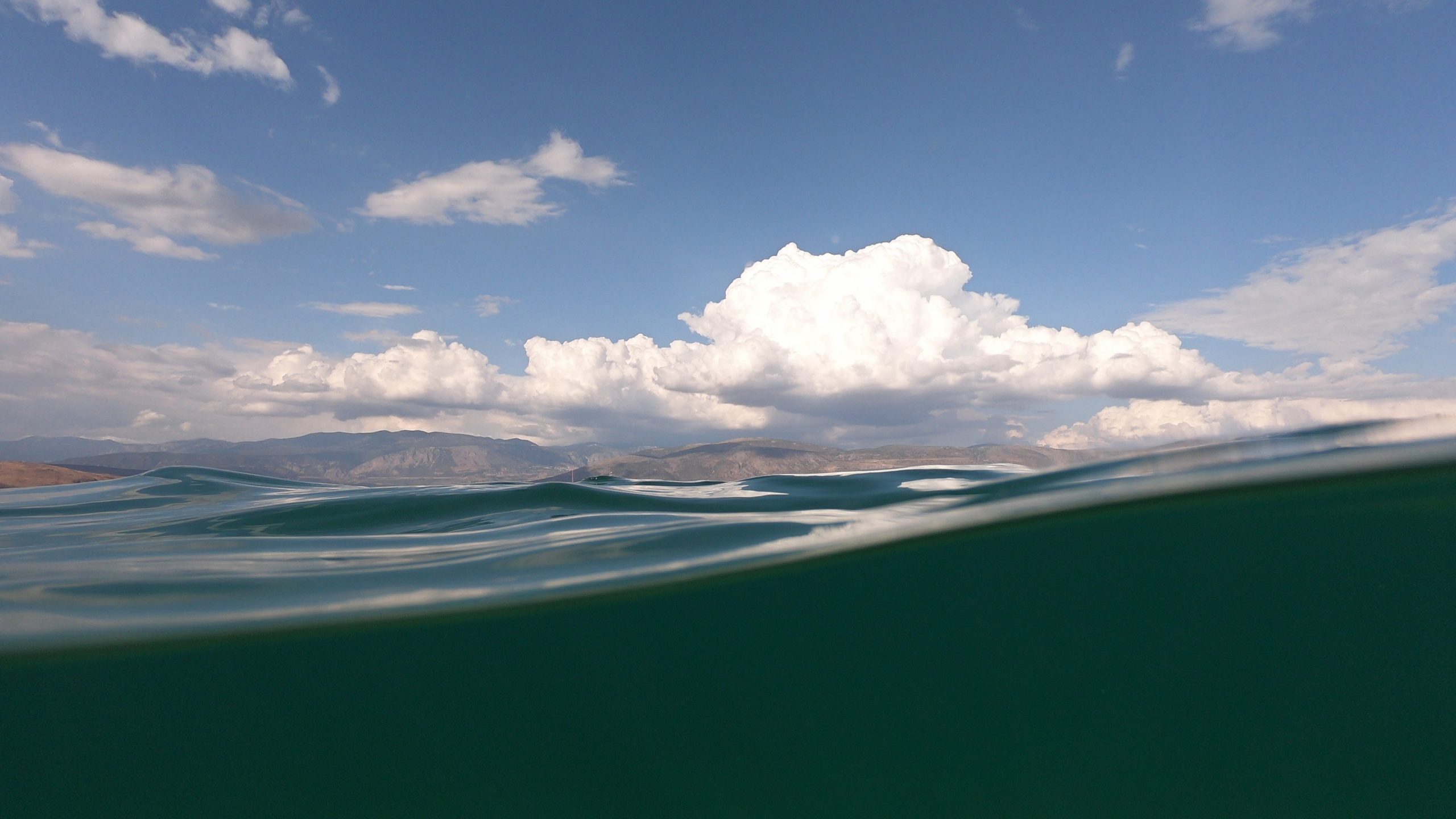
The ocean looks steady from the shore. Under the surface, though, it is constantly trading gases with the air above it. That exchange has always been part of Earth’s rhythm. What’s changed is the amount of carbon dioxide we’re adding to the atmosphere and how much of it the sea is taking in.
That matters because seawater chemistry is sensitive in ways that are easy to miss at first glance. A shift in acidity does not turn the sea into something dramatic overnight. It changes the balance of ingredients that many marine creatures rely on. It also changes how easily the ocean can keep absorbing carbon in the future.
Scientists call this ocean acidification and the phrase can sound abstract until you follow it into real places. Shellfish hatcheries can struggle. Tiny drifting snails can lose the smooth armor they need. Coral reefs can start to lose some of their most complex builders. Piece by piece, a chemical change becomes a biological one.
Researchers have been tracking that story for years, from broad reviews of seawater chemistry to field studies on living reefs. A classic review laid out the chemistry behind the trend, while newer reef work shows how those shifts play out in the wild. Together they reveal an ocean that is changing in quiet but far-reaching ways.
Why More Carbon Dioxide Ends Up In Seawater
The ocean absorbs a large share of the carbon dioxide people release into the air. Some of that gas dissolves directly at the sea surface, especially where water and atmosphere are in close contact through wind, waves and constant mixing. It’s one reason the ocean has helped slow the pace of atmospheric warming. That buffering role comes with a cost to seawater itself.
Once carbon dioxide enters seawater, it does not simply sit there as a harmless extra ingredient. It becomes part of a chain of reactions that reshapes the water’s chemistry. The more carbon dioxide in the air, the more pressure there is for the sea to take up additional gas. Over time, that means a growing chemical burden in surface waters.
The ocean is does not absorb carbon evenly. Cold waters pull in more carbon dioxide than warm waters do. Coastal regions can swing sharply as currents, runoff and biology all push local chemistry around. That is why some communities meet these changes earlier and more intensely than others.
Meanwhile, the sea is doing exactly what chemistry allows it to do. It is acting like a giant partner in the planet’s carbon cycle. That partnership has limits. As seawater changes, its ability to buffer incoming carbon shifts too, which feeds back into the whole system and affects how the ocean behaves in the decades ahead.
Scientists have described this as one of the clearest fingerprints of rising fossil fuel emissions. In the words of the Annual Review paper, rising atmospheric carbon dioxide reduces ocean pH and drives broad changes in seawater carbonate chemistry. That sounds technical. In practice, it means the ocean is absorbing our excess carbon and its internal balance is shifting because of it.
The Quiet Chemistry Shift
When carbon dioxide dissolves in seawater, it helps form carbonic acid through a direct chemical reaction. That acid then releases hydrogen ions into the water and those hydrogen ions are what lower the ocean’s pH. That shift looks minor on paper and the ocean does remain alkaline. Even so, a minor shift on the pH scale matters because the scale is logarithmic.
As acidity rises, another part of the chemistry starts to tighten. Carbonate ions become less available. Those ions are a basic building material for marine life that makes shells and skeletons from calcium carbonate. A drop in carbonate availability does not affect every species in exactly the same way, but it changes the water many of them evolved to live in.
That is why scientists often watch something called aragonite saturation. Aragonite is one form of calcium carbonate used by corals, pteropods and other calcifying organisms. When saturation falls, it becomes harder for these organisms to build and maintain their structures. In more corrosive conditions, existing shell material can begin to wear away.
Far from the lab bench, these chemical shifts spread through real oceans with real variability. Upwelling can bring naturally carbon-rich waters to the surface. Respiration by marine life can intensify local acidity. Rivers can add nutrients and organic matter that change coastal chemistry in their own way.
Recent NOAA reporting on a global analysis suggests the reach of this problem is broad. Their summary says about 40 percent of the global surface ocean and 60 percent of subsurface waters down to 200 meters have seen substantial compromise from acidification. The agency ties that trend to declining habitat quality for many calcifying species in what it calls a more pervasive threat than once thought. You can read that assessment for the wider picture.
The chemistry shift is measureable and its consequences are direct. As pH drops, carbonate ion concentrations fall with it. It changes the ingredients available to life. It changes how stress shows up from place to place. And it builds slowly enough to avoid headlines on many days, while steadily rewriting the rules of marine chemistry.
When Shell-Building Gets Harder
Many marine organisms build hard parts from calcium carbonate. Oysters do it. Mussels do it. Clams do it. So do tiny floating sea snails called pteropods, along with countless other species that sit lower in the food web. Their shells and skeletons are physical structures, but they are also chemical achievements, assembled from what seawater makes available.
As acidity rises, that work takes more energy. Young shell-building animals can be especially vulnerable because early growth stages are delicate and fast-moving. If those animals have to spend more of their energy budget on basic construction, they have less left for growth, reproduction, or surviving other stressors in their environment.
In some places, scientists have moved beyond theory and watched shell damage directly. NOAA researchers linked human-caused carbon dioxide to dissolving shells in pteropods off the U.S. West Coast. Those animals are sometimes called sea butterflies and the name suits them. They drift through the water with small wing-like flaps, looking almost weightless. Their shells, sadly, are anything but invincible.
Richard Feely, a NOAA senior scientist, put the problem in plain language when he said rising acidification is “making it more difficult for marine species to build strong shells.” That short line carries a lot of weight. Strong shells support feeding, movement, protection and survival. A shell that forms poorly can ripple through an animal’s whole life. The NOAA report on that pteropod work is here.
The story also reaches people. Shellfish hatcheries in the Pacific Northwest have already had to adapt to corrosive water conditions. That has made acidification feel less like a distant environmental trend and more like a direct challenge for food systems, livelihoods and coastal economies. In that sense, weaker shells are also a warning sign for the communities built around them.
Coral Reefs Start To Change
Coral reefs are often described through their color and beauty. Their true significance lies in their architecture. Reefs create three-dimensional habitat that shelters fish, supports invertebrates and blunts wave energy along coasts. Much of that structure depends on corals and crusty calcifying algae laying down calcium carbonate over long stretches of time.
Acidification makes that construction job harder. Corals can still grow under rising acidity, but many do so more slowly or with weaker skeletons. Some reef organisms show more tolerance than others, which means the reef community begins to shift. Over time, a reef can become less diverse and less physically complex, even before it disappears from sight.
A recent field study in Communications Biology offers a vivid example. Researchers examined reefs along a natural carbon dioxide gradient and found that reef communities changed progressively as aragonite saturation declined. Hard coral diversity dropped, calcareous algae declined and less structurally rich communities became more common as acidity increased.
One striking point from the study is how early those changes can begin. The authors found significant departures from present-day reef communities after relatively small declines in aragonite saturation. Ecological change does not require a sudden threshold. A reef can deteriorate gradually, losing complexity one step at a time.
Another important finding is that emissions pathways still matter enormously. Under lower emissions futures, reefs by 2100 could avoid some of the most severe acidification-driven shifts. Under higher emissions futures, the study points to much sharper losses in hard coral diversity and calcifying algae. That makes coral resilience partly a story about adaptation and very much a story about how much carbon dioxide humanity continues to release.
Even then, reefs are dealing with more than one pressure at a time. Heat stress, bleaching, pollution and overfishing all interact with acidification. A reef weakened by one force can become less capable of handling another. That is why scientists see reef change as a layered process, with chemistry, biology and climate all leaning on the same living system.
Small Creatures, Bigger Ripple Effects
It is easy to focus on coral reefs and shellfish because they are visible, valuable and familiar. Yet some of the most important acidification stories begin with creatures most people never notice. Pteropods, tiny planktonic snails, drift through polar and temperate waters and feed fish, seabirds and whales. A fragile animal can hold a surprisingly sturdy place in a food web.
When those species struggle, the effects can spread upward. A thinner shell can leave an animal more vulnerable to damage and predation. Lower survival in early life stages can shrink future populations. Less prey in the water column can then affect species that depend on seasonal pulses of abundance. This is how food web changes begin, quietly and from below.
Elsewhere, acidification may affect behavior and body function in ways that are still being worked out. Some species show altered growth. Some show reproductive stress. Others respond differently depending on temperature, oxygen levels, or local habitat. Marine ecosystems vary too much across species and regions for any single rule tonhold universally.
That complexity is one reason the newest NOAA summary drew attention. It points to sizeable habitat losses for pteropods in polar waters, for coastal shellfish along global shorelines and for some coral reef habitats in tropical and subtropical seas. The chemistry is one layer. The ecological consequences emerge through thousands of species-specific interactions that can reshape whole communities.
Seen this way, acidification is a story about scale. It starts with hydrogen ions and carbonate balance. It moves into shells, skeletons, larval survival and habitat quality. Then it reaches fisheries, biodiversity and the living texture of the sea. A change in tiny creatures can become a change in ocean ecosystems.
What The Ocean Looks Like Next
The future ocean will still be blue. Waves will still break. Tides will still rise and fall. Many of the biggest changes will play out at the level of chemistry, growth rates and which species manage to hold their ground. That makes this one of those environmental shifts that can remain hidden in plain sight until the patterns become impossible to ignore.
Some places will feel the change sooner. Polar waters are especially vulnerable because colder seas absorb more carbon dioxide. Coastal upwelling zones can also face intense swings, pulling corrosive waters upward where marine life and fisheries are concentrated. Tropical reefs, meanwhile, face the double strain of warming and acidification at the same time.
There is still room to influence the outcome. The reef study points to sharply different futures under different emissions pathways. Lower emissions mean slower chemical change and fewer severe habitat losses. Higher emissions mean a stronger shift toward less diverse, less complex marine communities. In other words, future ocean water is still partly a policy choice.
Scientists are also improving forecasts, monitoring networks and local adaptation strategies. Hatcheries can buffer intake water. Managers can track vulnerable seasons and regions. Long-term measurements can reveal where chemistry is changing fastest. Those steps help communities prepare and they help researchers connect the dots between global carbon trends and local marine impact.
Even so, adaptation has limits. No hatchery program replaces a stable climate and no local intervention neutralizes a global chemistry shift drivem by rising atmospheric carbon dioxide. The most direct path to slowing ocean acidification is reducing the emissions that cause it. That is the route that gives shell-building species, reefs and coastal economies the best chance of holding on.
For now, the ocean is telling a precise chemical story. It is absorbing carbon dioxide. It is growing more acidic. It is changing the terms of life for organisms that build with calcium carbonate. And as those organisms shift, the wider ocean changes with them. Rising acidity sounds like a subtle phrase. In seawater, it is becoming a powerful force.