Stand near the shoreline for even a minute and your body registers the change almost immediately. The air feels heavier with moisture. Your lips catch a trace of salt. Breathing can feel smoother, or at least distinctly different from inland air. This shift comes from a complex mixture of ingredients in coastal air – sea spray, humidity, dissolved minerals and microscopic particles lifted directly from breaking waves.
Some of these effects are immediate and physical. Others arise from the broader coastal environment itself, where open water, wind, sound and constant motion shape how the body and mind respond. Research on “blue spaces” suggests that environments near water can support well-being, while aerosol science reveals that the ocean also releases biologically active particles – and, under certain conditions, even pollutants – into the air we breathe.
What Sea Air Carries
At the shoreline, the ocean is continuously manufacturing airborne material. Waves collide, bubbles form and burst and fine droplets are thrown upward before drifting inland. As this spray evaporates, it leaves behind suspended particles that wind can carry for long distances.
These particles are not just salt crystals. Sea spray contains sodium and chloride, but also organic compounds and microscopic fragments of marine life concentrated near the surface. This gives coastal air its distinctive chemical signature – one reason a sea breeze feels so different from inland air.
Modern research has added even more depth to this picture. Studies show that sea spray aerosols can transport organic matter, extracellular DNA, bacteria and viruses from the ocean into the atmosphere. In effect, ocean air carries a faint, dynamic imprint of the sea’s living surface.
Because of this constant exchange, there is no single “ocean air.” Its composition shifts with wind strength, wave intensity, temperature, season and biological activity in the water. A calm, glassy morning produces a different aerosol mix than a storm-driven shoreline, meaning each breath near the coast is shaped by changing ocean conditions.
That variability matters because it determines what reaches the body. Skin, eyes, nose and lungs are all exposed to whatever the shoreline generates at that moment – sometimes a simple mix of salt and moisture, sometimes richer biological aerosols and occasionally traces of pollutants transported from elsewhere.
Salt, Moisture and the Airways
One of the most noticeable features of coastal air is humidity. Moist air helps reduce dryness in the nose and throat, which can make breathing feel more comfortable, especially after time in dry or air-conditioned environments. This alone can significantly influence how people perceive coastal air.
Salt is another defining element. Tiny droplets settle on the lips and are inhaled into the upper airway, where the nasal passages are already specialized to trap particles and regulate moisture. This interaction between salt, moisture and airway lining contributes to the familiar sensation of “cleared” breathing at the coast.
There is also emerging laboratory evidence that components of sea spray can interact with biological systems at the cellular level. For example, a Scientific Reports study found that natural sea spray aerosols can influence the mTOR pathway, which is involved in regulating growth and metabolism. While this does not directly translate into everyday health outcomes, it demonstrates that ocean-derived particles are biologically active, not inert.
Importantly, real-world effects depend on exposure conditions – distance from the surf, wind speed, aerosol concentration and individual sensitivity. The experience of coastal air is therefore not uniform. It varies from person to person and from moment to moment.
Still, the combined effect is often noticeable. Moisture eases dryness, salt subtly alters sensation and wind disperses inland particulates. Together, these factors create the widely recognized “feeling” of ocean air before it is ever consciously analyzed.
Tiny Ocean Particles in Every Breath
Each breath taken near the shoreline contains a complex aerosol mixture. Some particles are large enough to be trapped in the upper airway; others are fine enough to reach deeper into the lungs. Their size determines not only where they deposit in the respiratory system, but also how long they remain suspended in the air.
Chemically, these particles can carry salts, carbon-based compounds and fragments of marine biological material. Even when the coastline appears visually clean, the air above it is continuously shaped by microscopic exchanges between sea and atmosphere.
This also helps explain the distinctive smell of the ocean. Volatile compounds produced by marine organisms travel through the air and are processed by the olfactory system into a recognizable environmental signal. Salt, algae, damp minerals and surf all merge into a single sensory impression that the brain quickly associates with “the coast.”
From a physiological standpoint, being near the sea is an exposure event across multiple systems. The respiratory tract encounters aerosols, the skin interacts with mist and humidity and the nervous system processes wind, light and sound simultaneously. Coastal air is therefore not just inhaled – it is experienced across the entire sensory field.
Why the Coast Can Feel Restorative
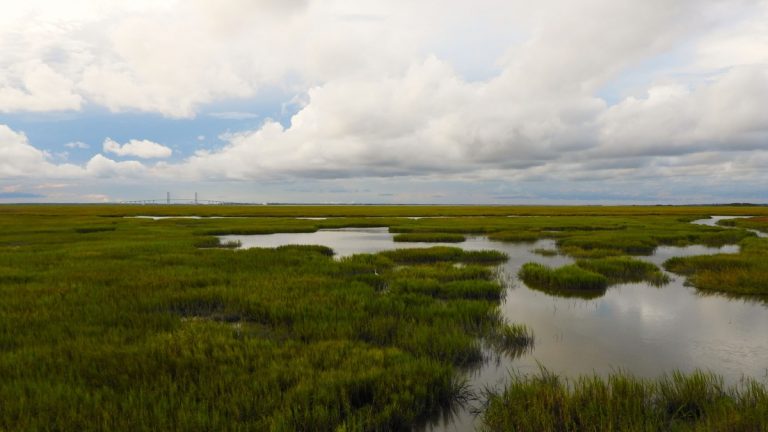
Beyond chemistry, the coastal environment itself plays a major role in how people feel. The World Health Organization and other health researchers have highlighted the importance of natural “blue spaces” in supporting mental well-being. The coast combines air quality with a broader sensory environment that includes motion, openness and sound.
Movement is often easier and more natural near water. People walk longer distances, pause more frequently and shift attention outward. This change in behavior can influence stress levels in subtle but meaningful ways.
The visual field also matters. The open horizon provides depth and distance that urban environments rarely offer. Waves introduce rhythmic variation without overwhelming complexity, while wind and surf create a broad, steady acoustic backdrop that can soften sharper, more intrusive sounds.
Social behavior often shifts as well. Coastal spaces tend to encourage slower pacing, casual interaction and shared observation of natural rhythms like tides and waves. These small changes in behavior can collectively support relaxation and mental restoration.
Ocean air, in this context, is part of a larger multisensory system. Its effects are not isolated to the lungs but extend into attention, mood and perception – arising from the combination of environment, movement and exposure.
When Ocean Air Carries Pollution
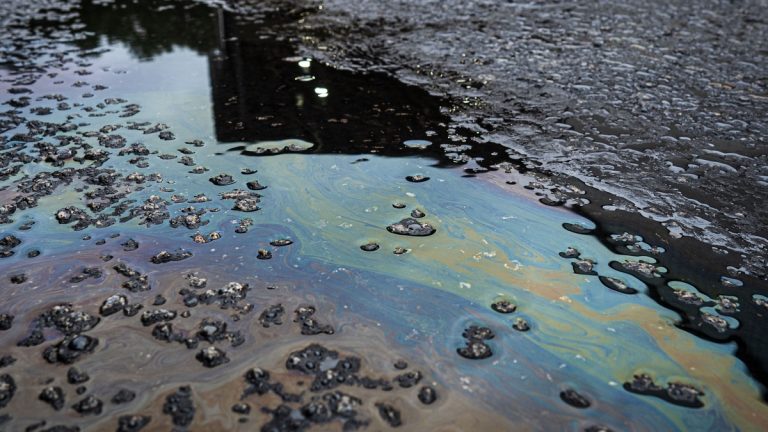
Despite its clean and refreshing reputation, ocean air can also carry traces of pollution. The sea acts as a reservoir for substances delivered by rivers, rainfall and human activity. Under certain conditions, wave action and bubble bursting can reintroduce these materials into the atmosphere.
Recent research highlighted in Nature has shown that sea spray can transport per- and polyfluoroalkyl substances (PFAAs), often called “forever chemicals,” back into the air. This means that pollutants entering the ocean do not always remain there – they can re-enter the atmosphere through natural processes.
This complicates the idea of “clean coastal air.” What reaches the shoreline is a mixture shaped by both natural marine processes and human environmental impact. Nearby industry, shipping activity, urban runoff and water quality all influence what is present in the air above a given beach.
As a result, coastal air quality varies widely from place to place. Some shorelines offer relatively clean atmospheric conditions, while others reflect the influence of dense human activity nearby.
A Living Interface Between Ocean and Body
Ocean air is neither simple nor uniform. It is a constantly shifting mixture of salt, moisture, biology and sometimes pollution – produced at the exact boundary where water meets atmosphere. Each wave helps rebuild it. Each breeze redistributes it.
That is why the shoreline feels so immediate. It is not just a view or a destination, but a living interface where physical, chemical and sensory systems meet. The body responds because it is directly part of that exchange.
In the end, coastal air is both familiar and complex. It can soothe, stimulate and occasionally challenge the body – all at once. And every breath near the sea is a reminder that the ocean is not distant or separate, but continuously interacting with the air we live in.